Content
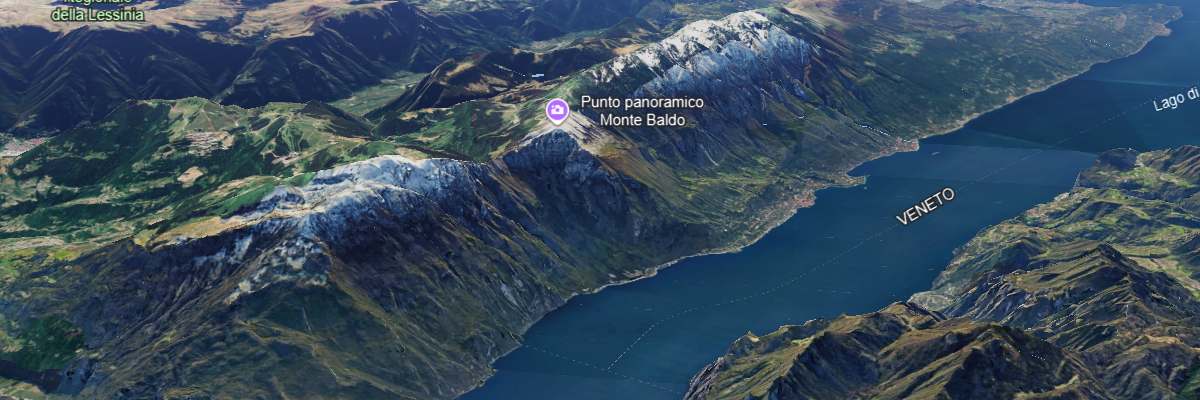
Monte Baldo represents one of the most fascinating mountain systems in the southern Alps and is an essential natural landmark for visitors staying in Pai di Torri del Benaco. This mountain ridge stretches between the provinces of Verona and Trento and dominates the eastern shore of Lake Garda, offering an environmental heritage of extraordinary richness.
Since the Renaissance, Monte Baldo has been defined as “Hortus Europae” (Garden of Europe). It is renowned for its biodiversity, exceptional floristic variety, and the high presence of endemic species, particularly wild orchids. Understanding the geological origin and natural history of Monte Baldo allows visitors to fully appreciate its uniqueness and scientific importance.
Geological Origin of Monte Baldo

Monte Baldo was primarily formed during the Mesozoic era, when the area was covered by a shallow tropical sea. The calcareous sediments that accumulated over time gave rise to the present rock formations, mainly composed of limestone and dolomite.
During the Alpine orogeny, which occurred between 65 and 2 million years ago, tectonic forces caused by the collision between the African and European plates uplifted these marine sediments, shaping the Monte Baldo ridge. The result is a north–south oriented mountain chain with peaks exceeding 2,200 meters, including Monte Altissimo di Nago (2,079 m) and Cima Valdritta (2,218 m), the highest summit.
Its particular exposure and geographical position near Lake Garda have created a unique microclimate combining Alpine and Mediterranean influences.
Isolation During the Ice Ages: A “Biological Island”

One of the most significant aspects of Monte Baldo’s natural history concerns the Quaternary glaciations. During the last glacial period (Würm), much of the Alps was covered by massive ice sheets. However, certain areas of Monte Baldo remained partially ice-free or served as peripheral refuges not completely invaded by glaciers.
This relative isolation transformed Monte Baldo into a kind of “biological island.” Plant and animal species that survived in these glacial refuges evolved independently, leading to numerous endemic species found exclusively in this area.
This isolation, combined with a remarkable altitudinal range (from 65 meters at lake level to over 2,200 meters at the peaks), makes Monte Baldo an extraordinary natural laboratory that has attracted botanists, zoologists, and naturalists since the 16th century.
Flora of Monte Baldo: A Unique Botanical Heritage in Europe

Monte Baldo hosts more than 2,000 plant species, an exceptional number considering the relatively limited surface area of the mountain range. The combination of Alpine and Mediterranean climates allows the coexistence of species typical of very different environments.
Among the most significant species are:
Baldensian endemics (such as Campanula petraea and Carex baldensis);
Relict Alpine species;
Mediterranean plants rising from the warmer slopes overlooking the lake.
The Orchids of Monte Baldo
Particularly noteworthy is the presence of numerous wild orchids, one of the main highlights of the spring season.
Among the most widespread species are:
- Orchis purpurea
- Ophrys insectifera
- Ophrys apifera
- Dactylorhiza fuchsii
- Anacamptis morio
These wild orchids are distinguished by sophisticated evolutionary strategies, including mimicry and highly specialized insect pollination. Some Ophrys species, for example, imitate the appearance and scent of specific female insects, attracting males and ensuring pollination.


The Upcoming Spring Bloom
With the arrival of spring, between April and June (depending on altitude), Monte Baldo transforms into a natural Alpine garden. The upcoming spring season represents an ideal opportunity to observe orchid blooms and many other spontaneous species.
The hilly areas above Pai and the intermediate slopes between 600 and 1,500 meters provide ideal habitats for observation. It is important to note that wild orchids are protected species and must not be picked or damaged.
Fauna of Monte Baldo
The fauna reflects the environmental complexity along the altitudinal gradient.
Among mammals:
- Roe deer
- Red deer
- Chamois
- Fox
- Badger
In recent decades, large predators such as the wolf have also reappeared in nearby Alpine areas.
The birdlife is particularly rich and includes species such as the golden eagle, peregrine falcon, and numerous Alpine passerines. Rocky, forested, and meadow habitats support remarkable ecological diversity.
Insects and butterflies are also significant, especially due to the abundance of nectar-producing plants that sustain pollinator populations.


Landscape and Environmental Features
Monte Baldo is characterized by:
- Significant altitudinal variation
- A privileged position overlooking Lake Garda
- Mild microclimate on southern slopes
- High-altitude Alpine meadows
- Beech, hornbeam, and fir forests
The panoramic views of Lake Garda are a major attraction. From the ridges and trails, visitors can observe a unique landscape contrast between Alpine environments and Mediterranean vegetation.
Sustainable Tourism and Environmental Protection


Monte Baldo is a delicate ecosystem. Protecting biodiversity is a priority that is also recognized through protected areas and conservation initiatives.
Responsible tourism means respecting marked trails, refraining from picking wild flowers, paying attention to wildlife, and reducing environmental impact.
Promoting the area requires scientific knowledge and awareness of its natural value.
Conclusion
Monte Baldo is a destination of extraordinary naturalistic value for those visiting Pai di Torri del Benaco on Lake Garda. Its geological origin, isolation during the ice ages, and consequent wealth of flora and fauna make it unique in the Alpine landscape.
Next spring will offer the ideal opportunity to admire the spectacular flowering of orchids and discover an area that has fascinated scholars and travelers for centuries. Visiting Monte Baldo means immersing yourself in a complex ecosystem, rich in natural history and scenic beauty, while fully respecting its fragile biodiversity.